The Whale
An ecological reinterpretation of Moby Dick, blending established theatrical practice, experimental digital processes and creative access on a vast scale.

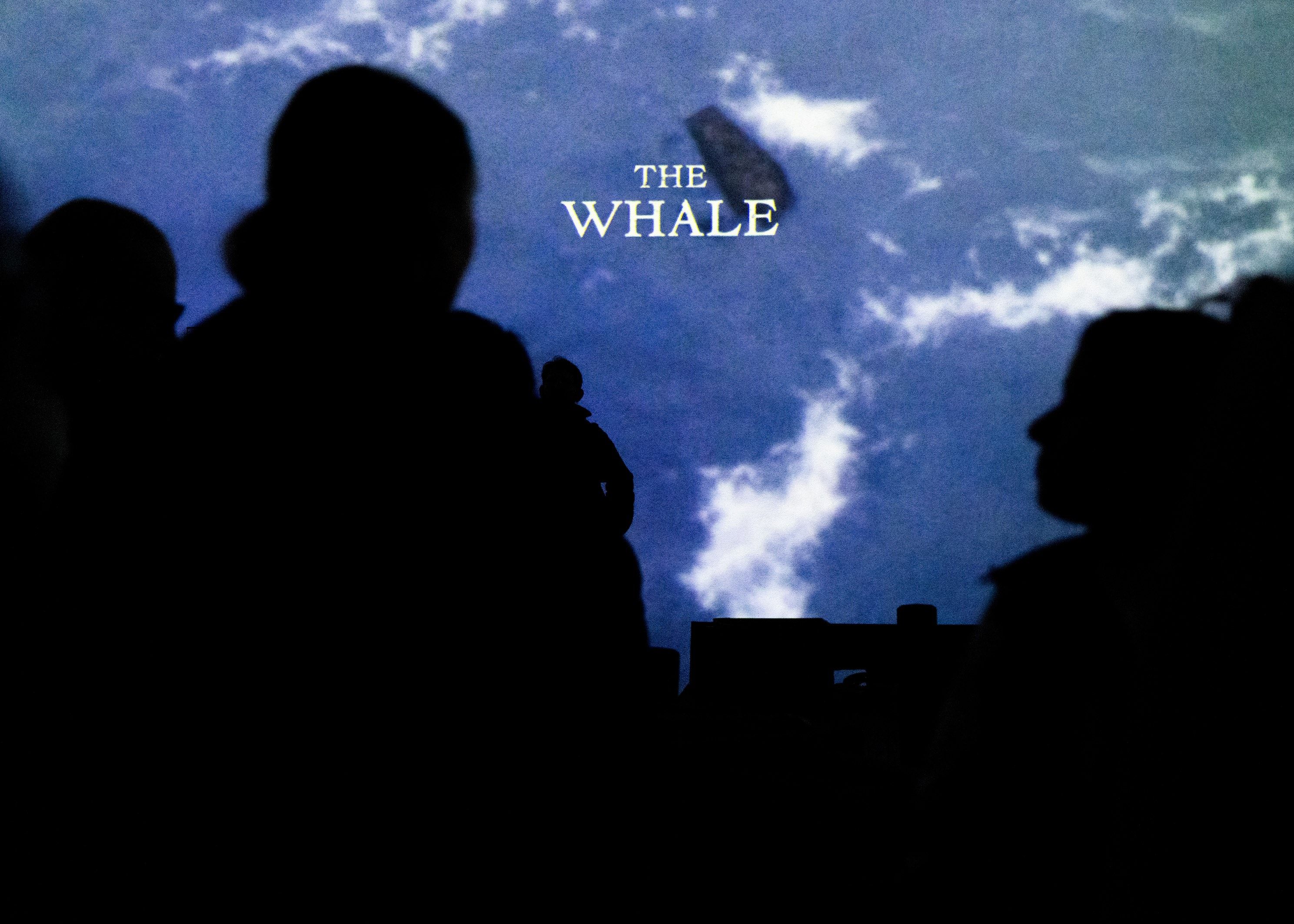
The Whale is an ecological reimagining of Moby Dick for live audiences. One of nine projects selected for Expand funding from Immersive Arts, it premiered at Frameless in central London as a proof of concept, playing to full houses and enthusiastic audiences.
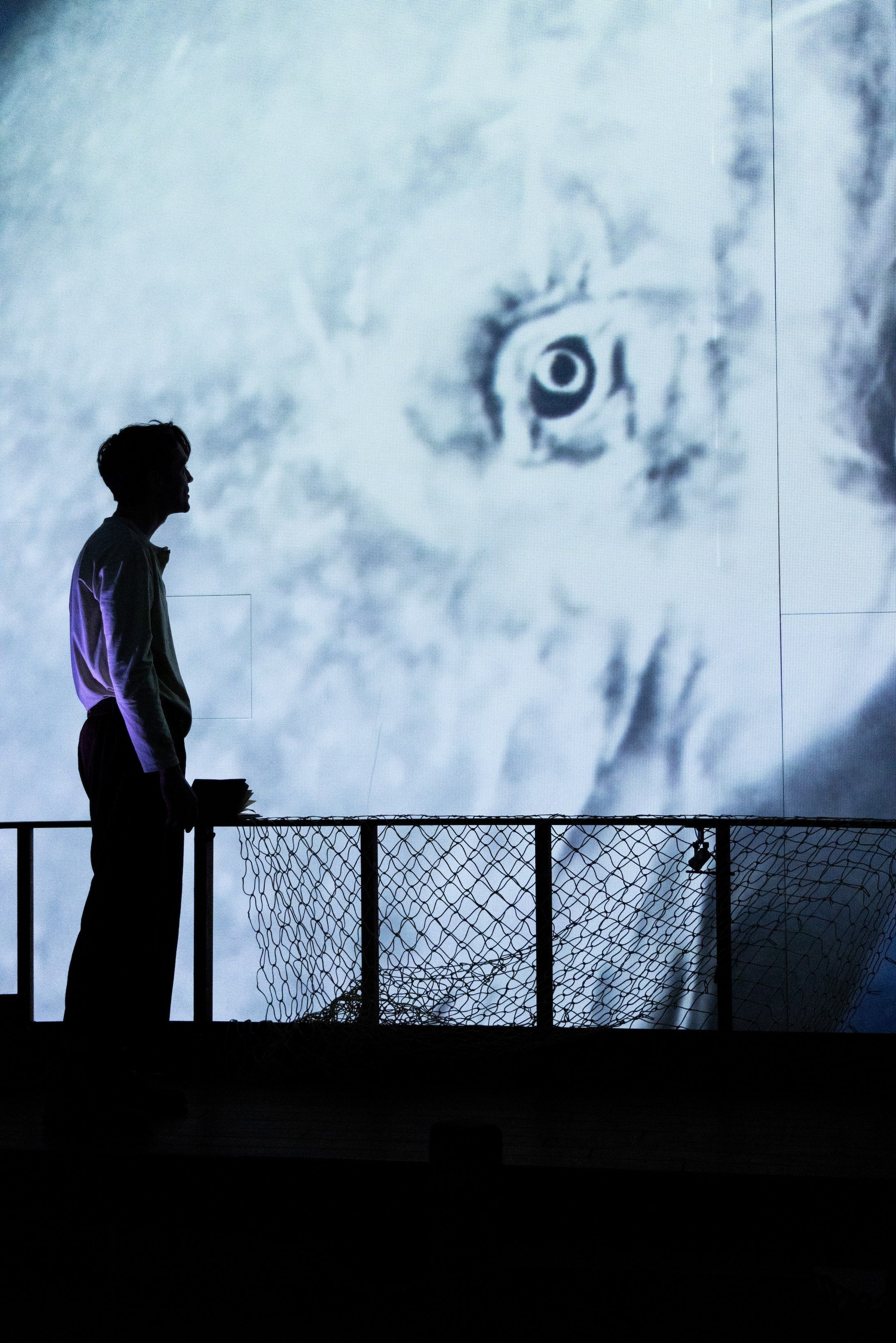
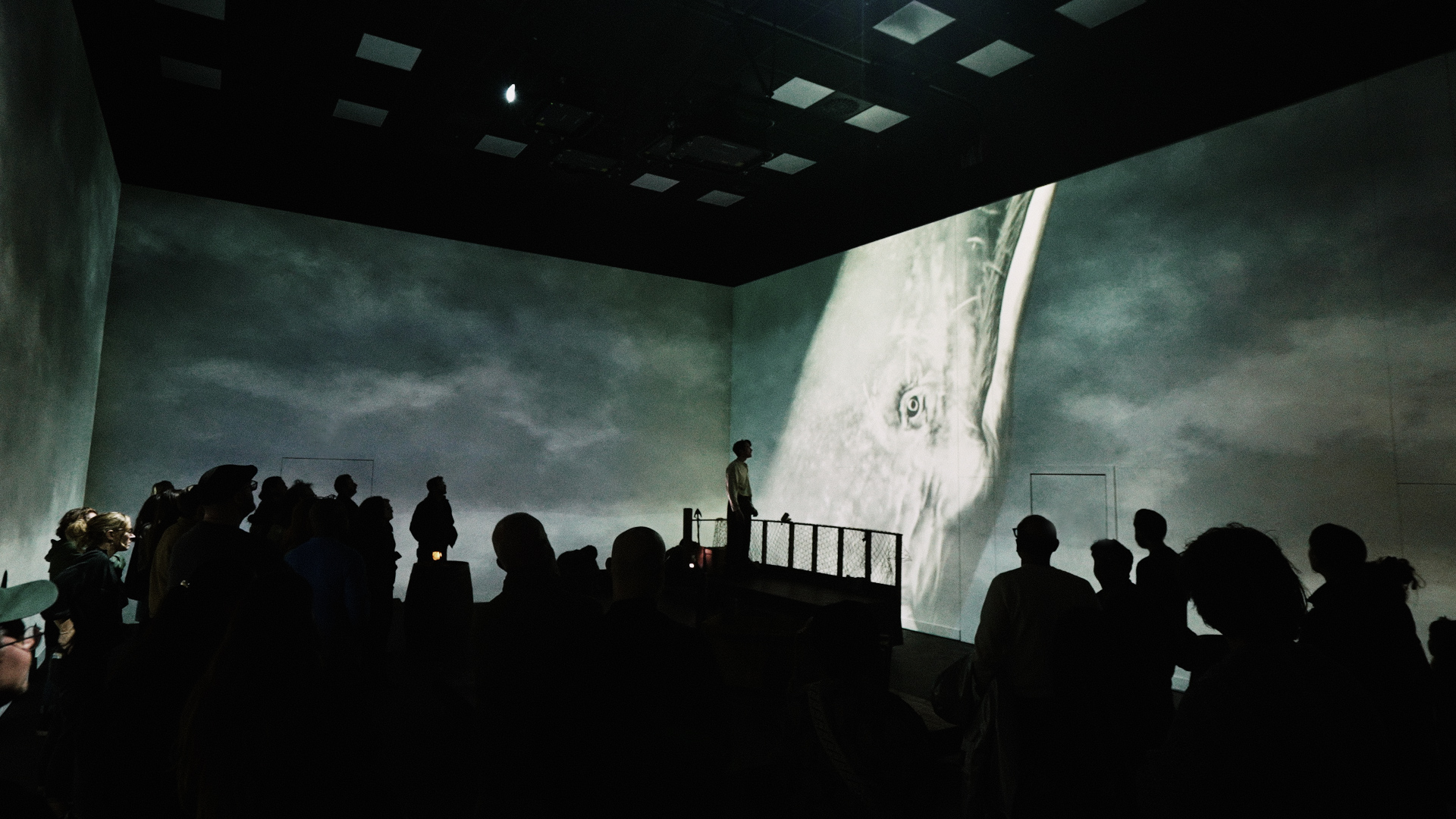
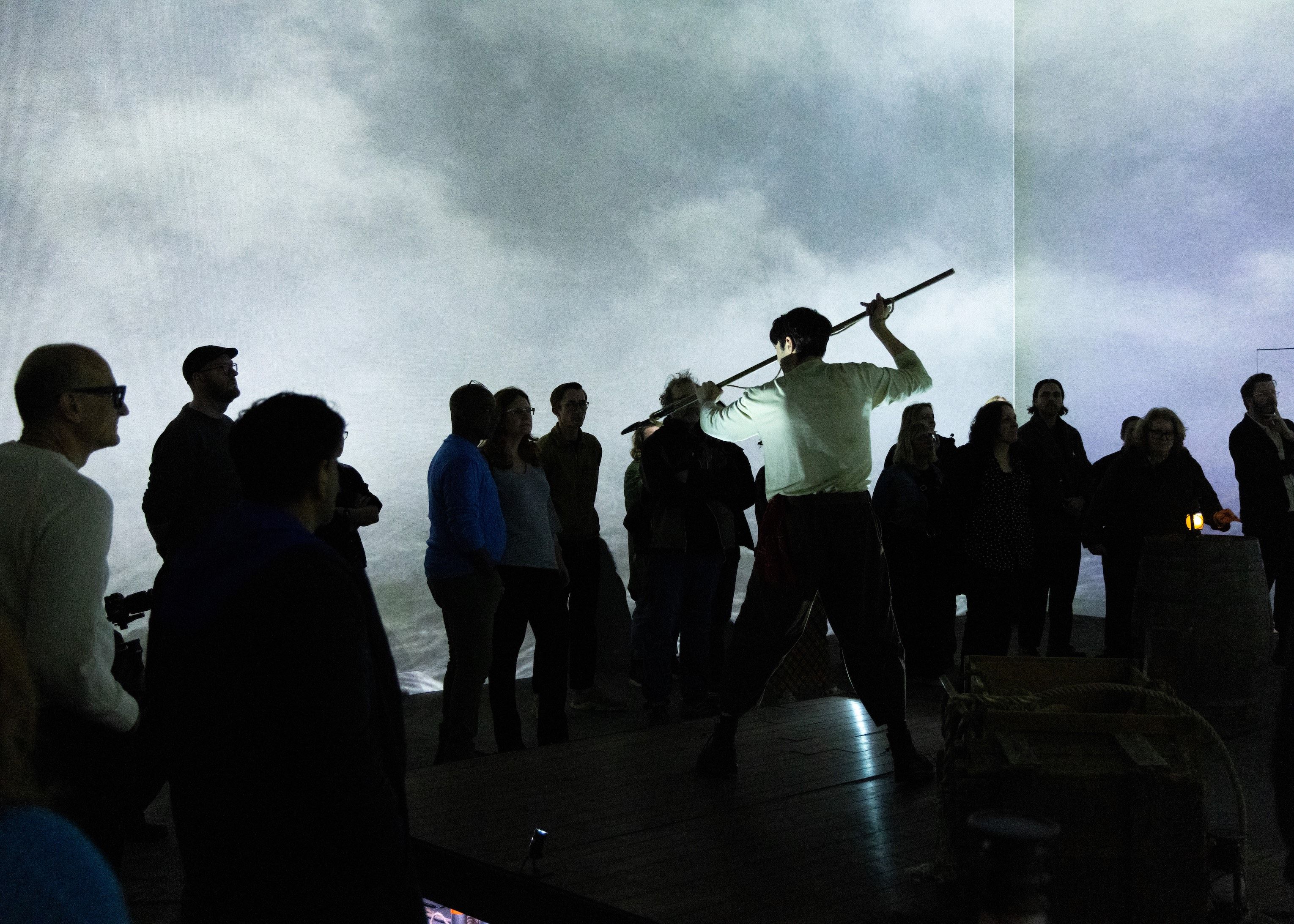
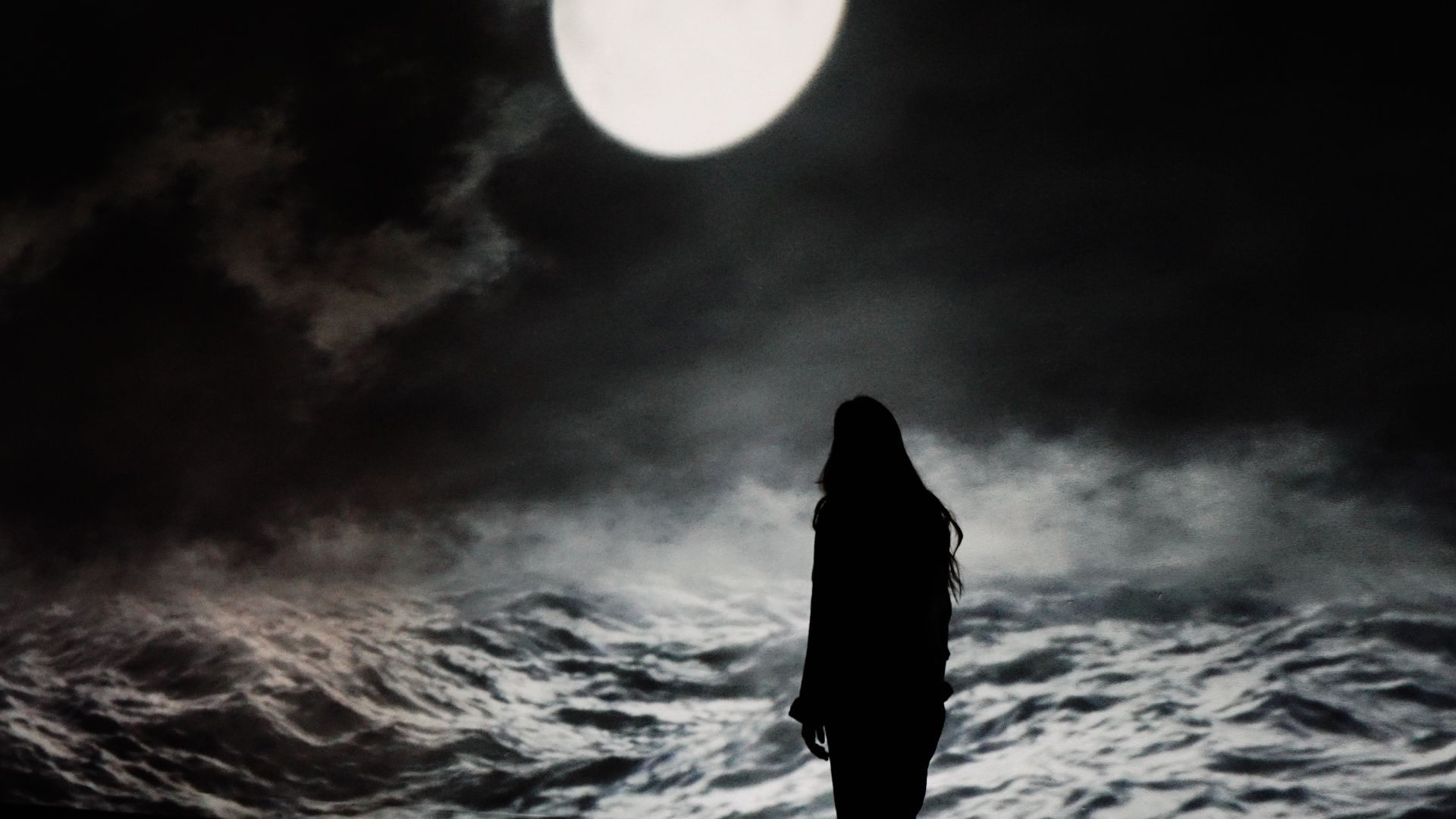
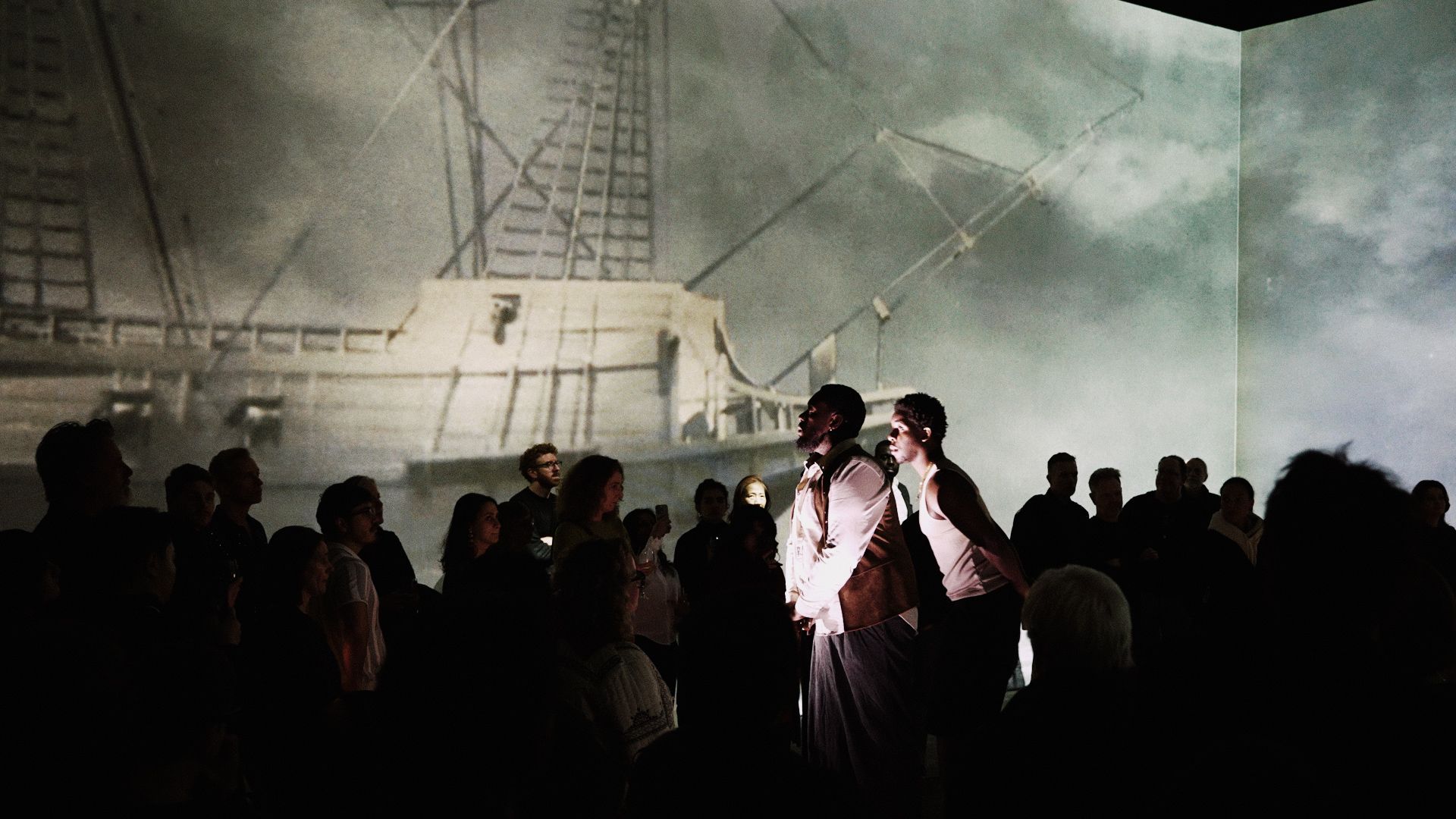
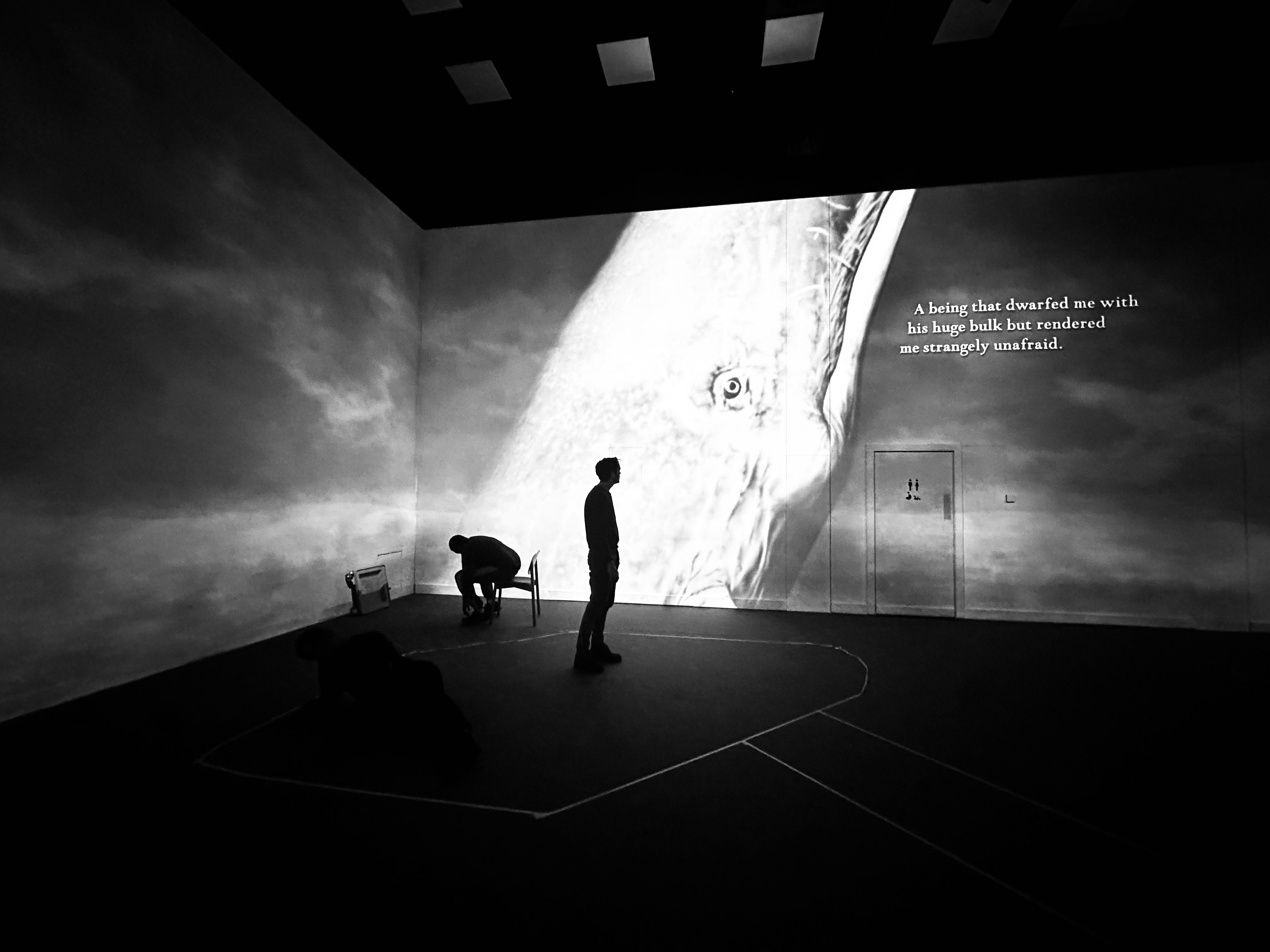
Staged within a vast projection gallery, the work brings performers and audiences inside a shared 180° immersive visual and audio field. Moving image and spatial sound envelop physical environments and bodies, dissolving the conventional separation between stage and screen, physical and digital. Live performance unfolds within and against projected environments, accompanied by spatial sound, a constructed set and an original score. The scale of projection is not a backdrop but an active partner, surrounding both audience and performer.
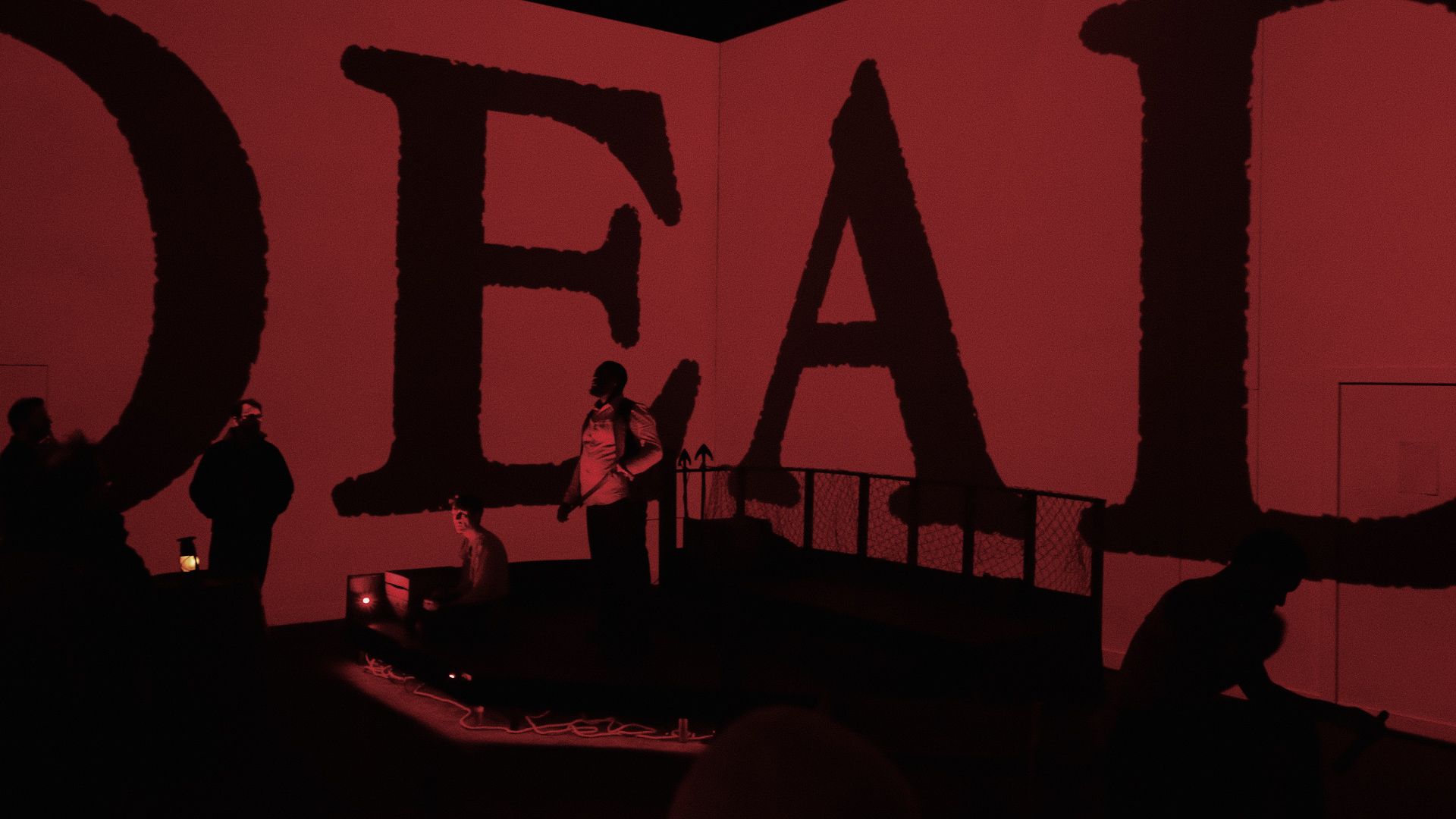
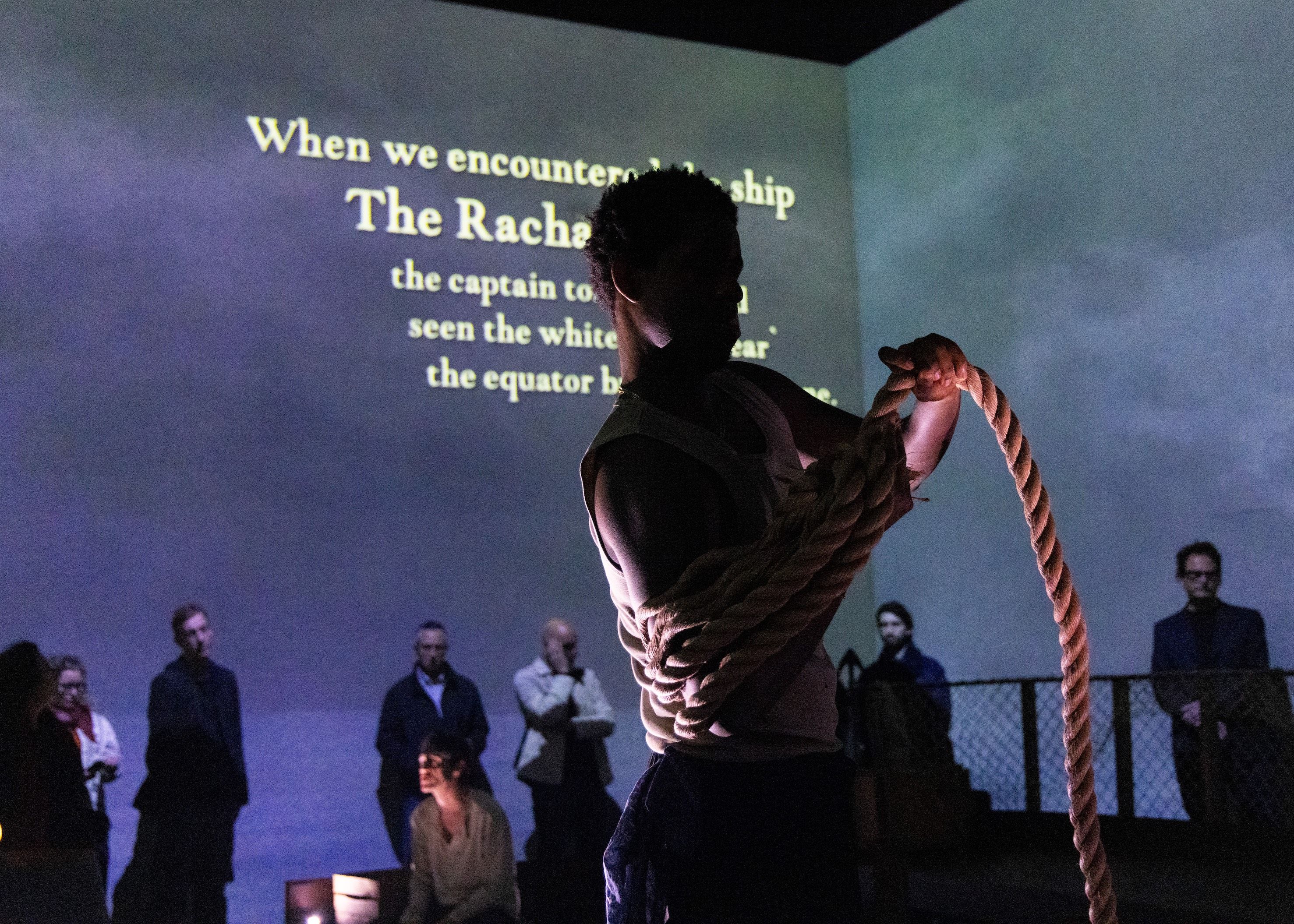
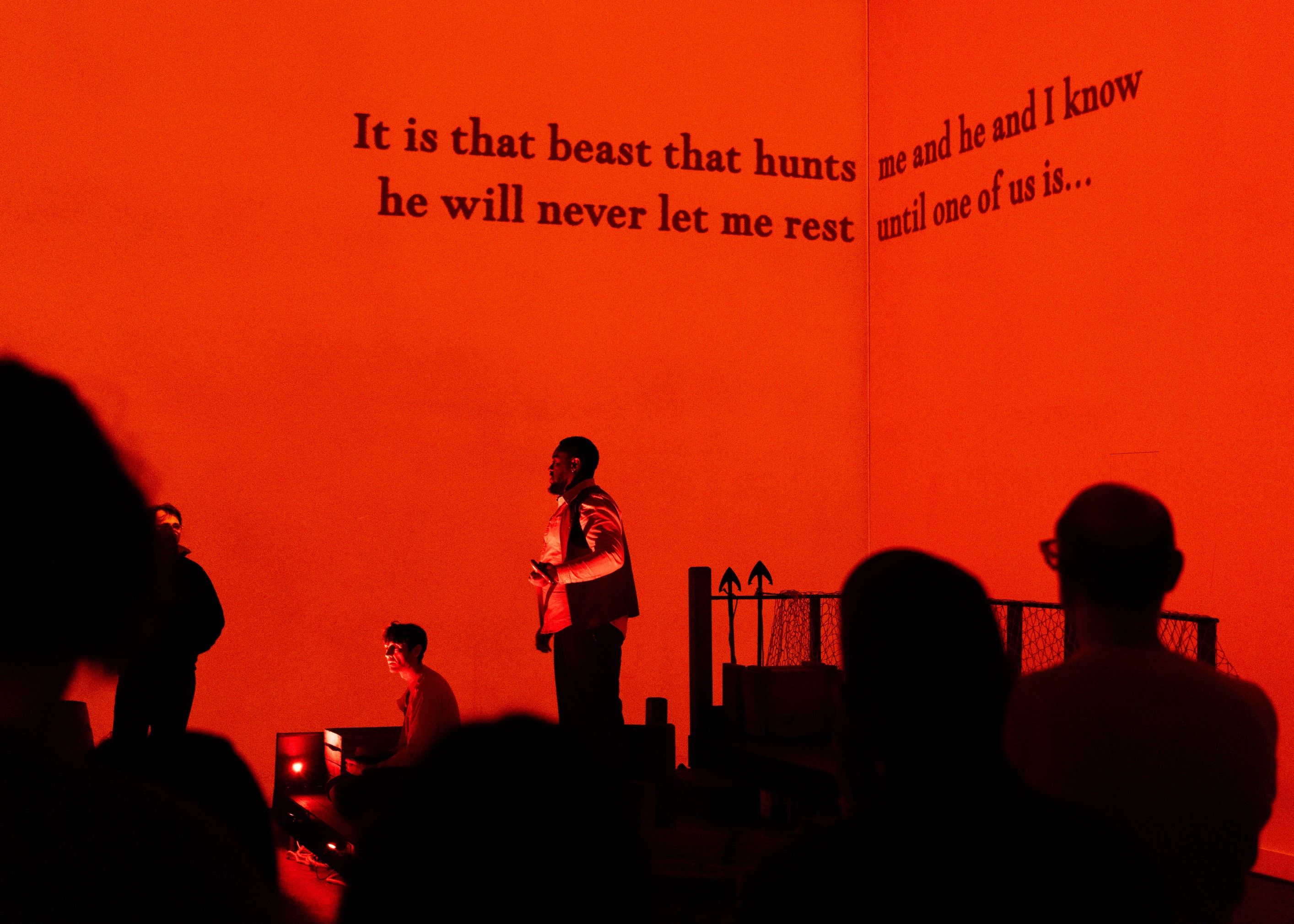
Embedded within this environment is a newly developed system of spatial creative captioning, built in collaboration with deaf, deafened and hard of hearing artists and audiences. Rather than occupying a fixed, peripheral position, captions are integrated into the projected world. Text travels across surfaces, shifts scale and tempo, and interacts with performers and sound, operating as part of the scenography and dramaturgy. Creative access informed not only how the work is received, but how it is structured and composed from the outset. As Ben Glover, who led on captioning, put it, “the captions become a character”.
The Whale was brought to life by Jack Hardiker-Bresson (Office of Everyone) and Sharon Clark (Raucous) through a multidisciplinary collaboration spanning theatre, design, 3D animation, sound composition and creative access. It operates across commercial and research contexts, functioning simultaneously as performance and inquiry through partnerships with cultural and research institutions.
Performances are inherently relaxed, with audiences encouraged to move around the environment and performers. With a blend of innovative and established creative techniques, The Whale creates a collective experience that could be seen as a more communal form of virtual reality.
Listen to Jack Hardiker-Bresson and Ben Glover speak about Creative Access in The Whale on the BBC here.
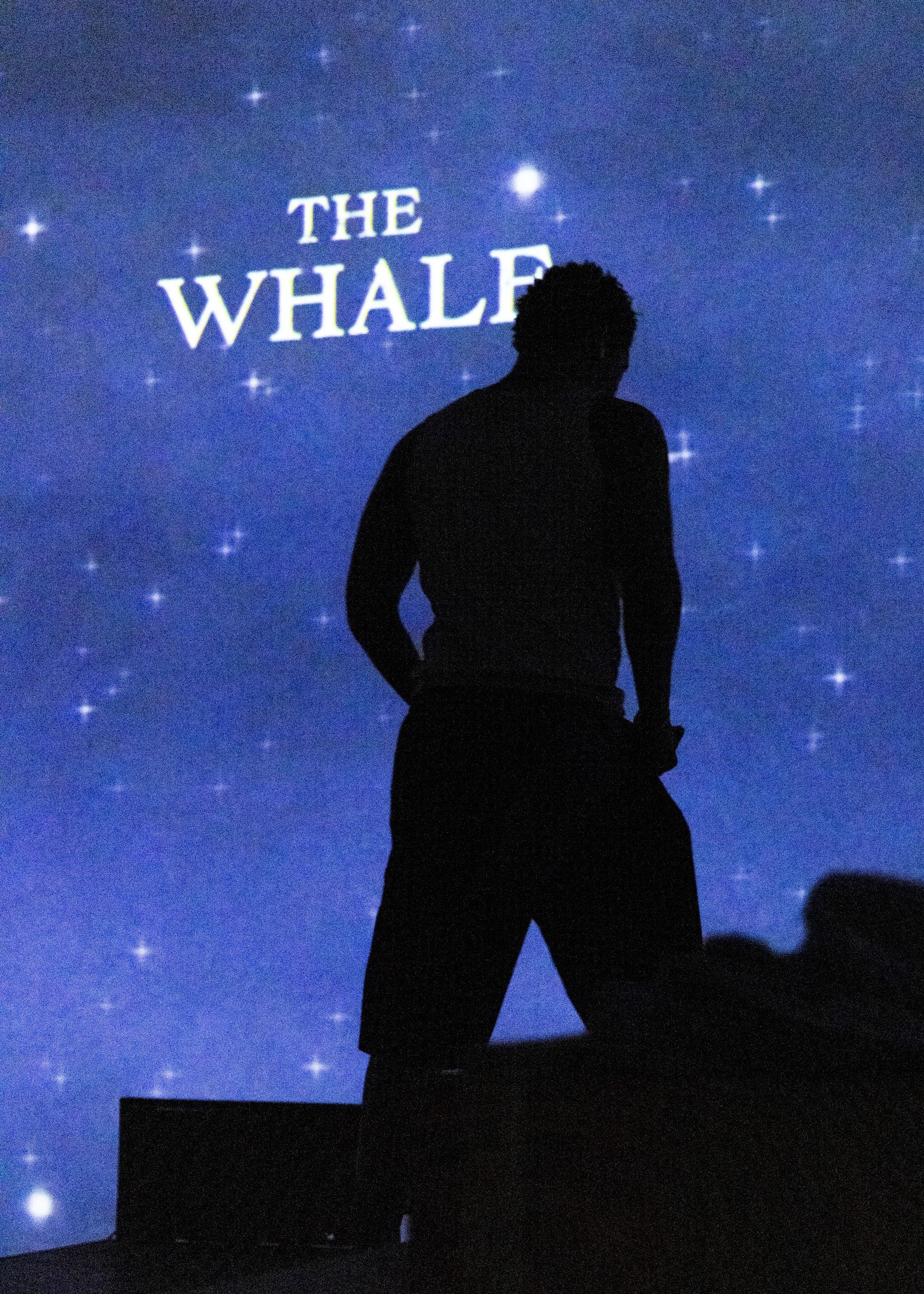
![Sillohette of man stood against immersive screen with the whale logo behind him]()
Production photoMargherita Allievi ![Man stood in front of giant projected whale on immersive 180 degree screen]()
Production photoMargherita Allievi
![Crowded room with large immersive projected whale - almost like virtual reality VR]()
Production photoSung Hoon Song ![The word DEAD projected on screen - accessible creative captions for deaf, deafened and hard of hearing audiences]()
Production photoSung Hoon Song ![Man on stage with harpoon pointing at audience]()
Production photoMargherita Allievi ![Women stood in front of huge 3D animated ocean scene projected on wrap around immersive screens]()
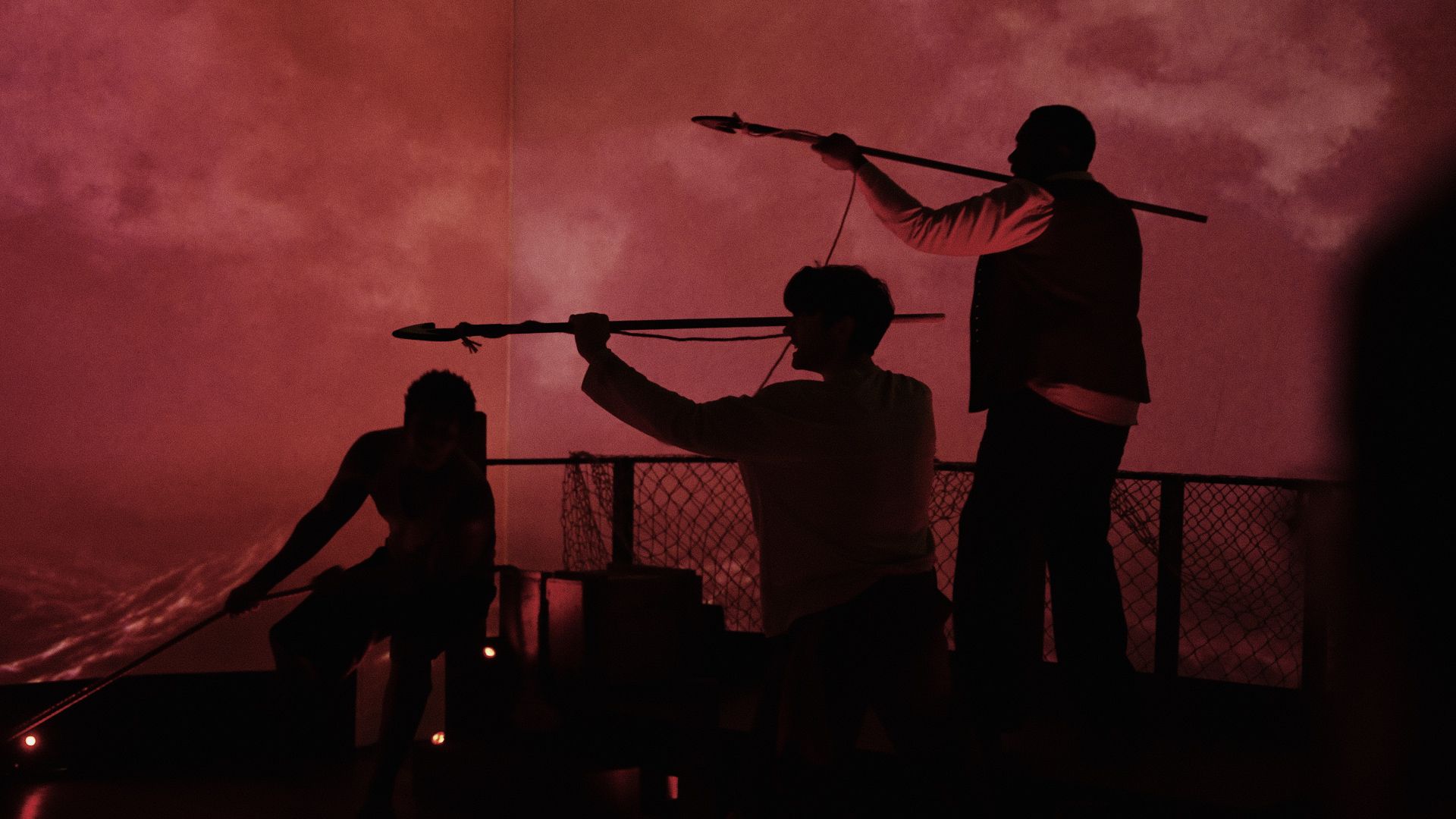
Production photoSung Hoon Song ![Three men with harpoons against red backdrop]()
Production photoSung Hoon Song ![crowded room with large projected whaling ship]()
Production photoSung Hoon Song ![Man gathering rope on stage in projected space - with accessible creative captions for deaf, deafened and hard of hearing audiences]()
Production photoMargherita Allievi ![Man on stage with red backdrop and text written on screen behind him - accessible creative captions for deaf, deafened and hard of hearing audiences]()
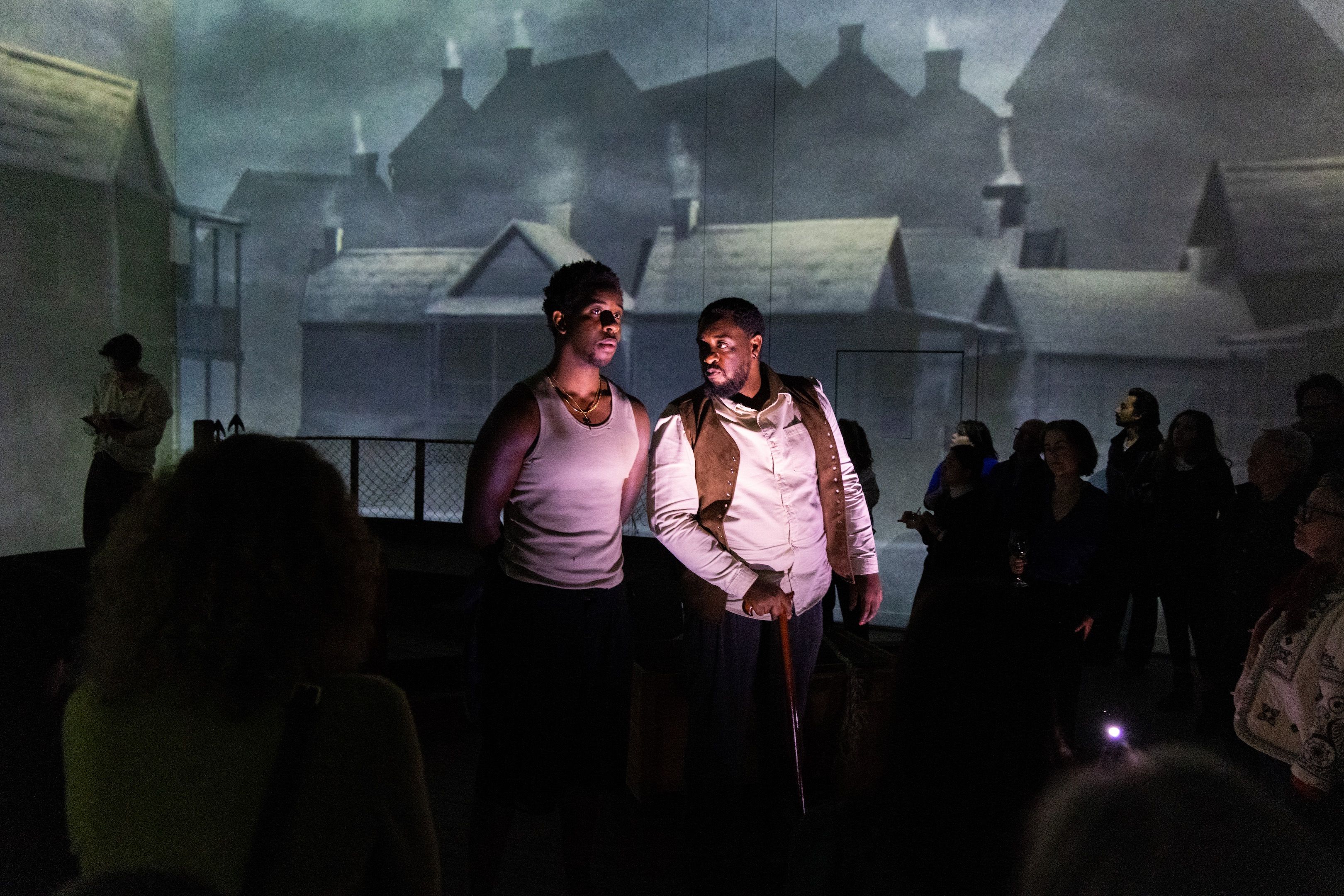
Production photoMargherita Allievi ![Two men stood on stage with projected backdrop of buildings behind them]()
Production photoMargherita Allievi ![The Whale logo projected on screen]()
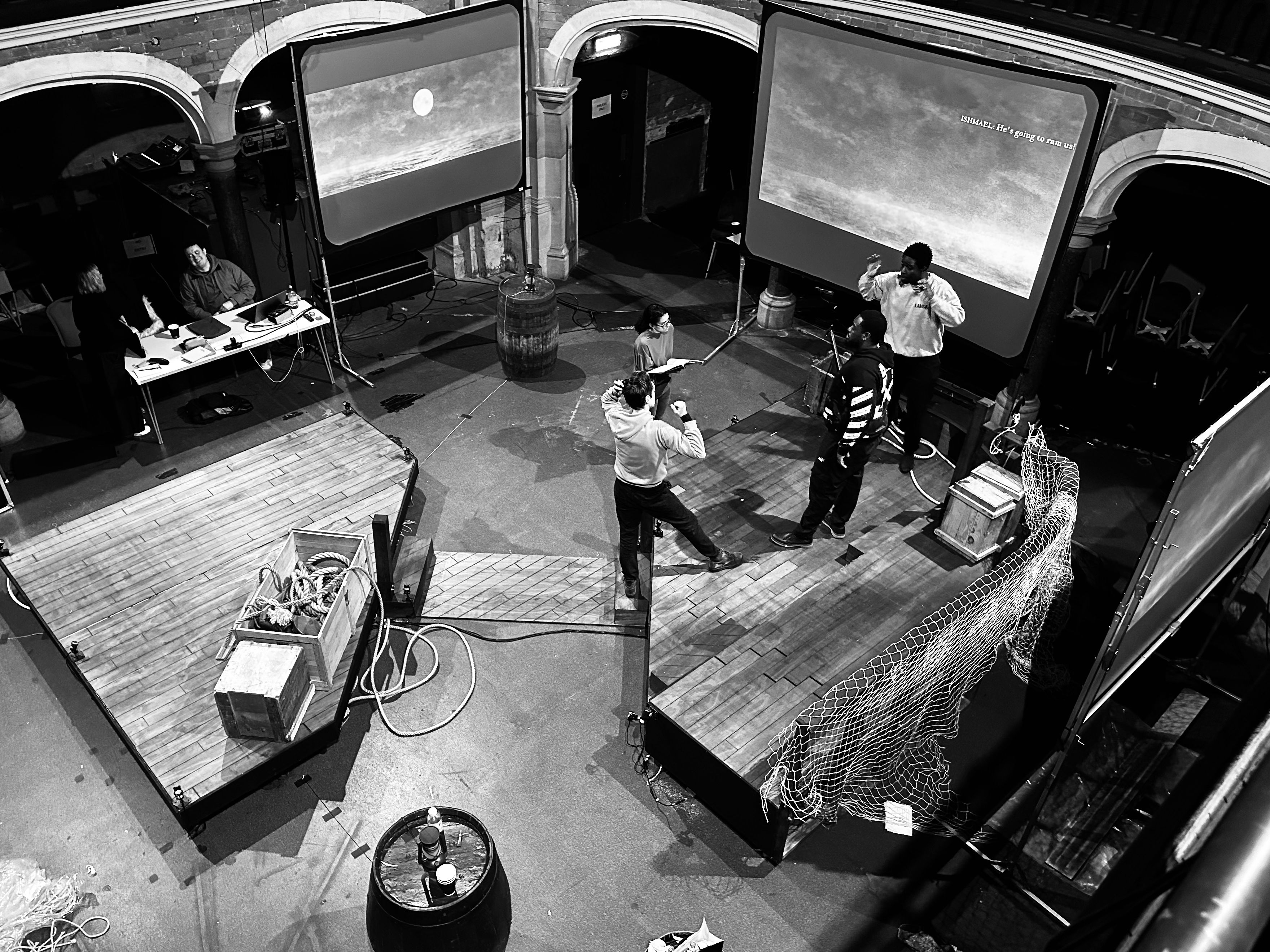
Production photoMargherita Allievi ![Overhead shot of rehearsal space with set]()
Early rehearsals with setJack Hardiker-Bresson ![Actor in large immersive projection space with white whale on screen]()
Later rehearsals without setJack Hardiker-Bresson